

I’ve always been a fan of the lamentably late Powers Boothe. He could portray smooth malevolence effortlessly right up there with the best of them, and he definitely was on my list of Actors Whose Presence in a Project Means I’ll Like It.
While his portrayal of “Curly Bill” Brocious wasn’t the primary reason I enjoy the movie Tombstone — the equally-lamentably late Val Kilmer was my Huckleberry there — it’s Boothe’s line I like to quote when it’s time to dismiss those undeserving of my attention.

Naturally, Boothe has been on my mind lately when thinking about the Atlantic Coast Conference and its relationship or lack thereof with Notre Dame. It started with the unprofessional (and definitely antagonistic) behavior of the conference in December regarding a potential Notre Dame CFP bid, but reared its head again a couple days ago with noted tress-tugger Brett McMurphy’s report from the annual conference meeting, complete with anonymous quotes from AD’s too timid to put their names to their thoughts:
I know feeding the trolls isn’t the best use of my time, but this topic has been gaining strength on our message boards lately and perhaps it’s time to address it: Has the relationship between Notre Dame and the ACC run its course?
My answer, all things considered: Not quite yet.
Plenty of Reasons for ND to Bail
“Wait a second, Mike,” you’re thinking, “you opened this with the whole Powers Boothe thing but you don’t want ND to leave?”
I didn’t say that. That was an expression of my emotional id, which certainly would love for ND to leave the ACC. It’s not like they lack reasons:
The instability of the conference
It seems like only yesterday we were talking about Florida State and Clemson suing the ACC in an effort to abandon what they saw as an unfair revenue sharing agreement. In order to prevent a stampede to the exits, the ACC settled the lawsuit with new rules favorable to the pair in both financial and participation aspects.
Even after all that, the ACC remains on very shaky ground. Everyone waits with bated breath for the next major realignment, and it very much remains to be seen where some of the ACC programs land, particularly those incapable of supporting their brands nationally.
(By the way, for those anonymous twits who complained how they’re being treated unfairly, note that Miami was able to keep its playoff revenue after their title game run. Sounds like banging the drum for the Canes didn’t do much for you either)

The effect on Notre Dame’s football schedule
Notre Dame’s 2026 football schedule isn’t of good quality and they’ve received plenty of criticism for it. There’s lots of blame for that to go around, including former Athletic Director Jack Swarbrick’s efforts to schedule double-digit wins for limited former football coach Brian Kelly.
But also doing a lot of work in that effort is the lack of quality of the ACC teams ND will play this year. Miami certainly is up off the mat and a quality opponent. SMU, while not necessarily top 25, has the potential to get in there by the time the Irish face them in November.
But North Carolina, Stanford, Boston College and Syracuse were objectively awful last year and not necessarily expected to be much better in 2026. Even if you could swap them out, for whom would you do it? Wake Forest? NC State? Cal? Teams with zero affiliation with Notre Dame and about whom the average Irish fan can spare no interest?
The ACC is a bottom-heavy football conference. If they’re going to insist on distributing games with Notre Dame equally to their members, great and small, ND’s schedules will continue to be affected negatively.

Notre Dame doesn’t need the bowl slots anymore
The advent of the College Football Playoffs has gutted the traditional bowl system, with players opting out of participating to prevent career-altering injuries in a game that doesn’t matter. As much hassle as Notre Dame took for not rewarding ESPN for snubbing them by playing in their “last-two out” Pop-Tart nonsense, they weren’t the only team that decided not to play, and their players certainly weren’t the only ones who refused to risk injury.
One of the main benefits of ACC affiliation for Notre Dame was supposed to be access to the conference’s bowl affiliations. If for whatever reason ND didn’t make the BCS-level post-season games, they would have options should the players decide to extend the season.
That’s gone out the window now, and if the CFP expands to 24 teams, the value of those games will drop even further. So if a non-playoff bowl invitation has little value, so does the access to the ACC’s preferred list.
The ACC benefits more than Notre Dame does in football
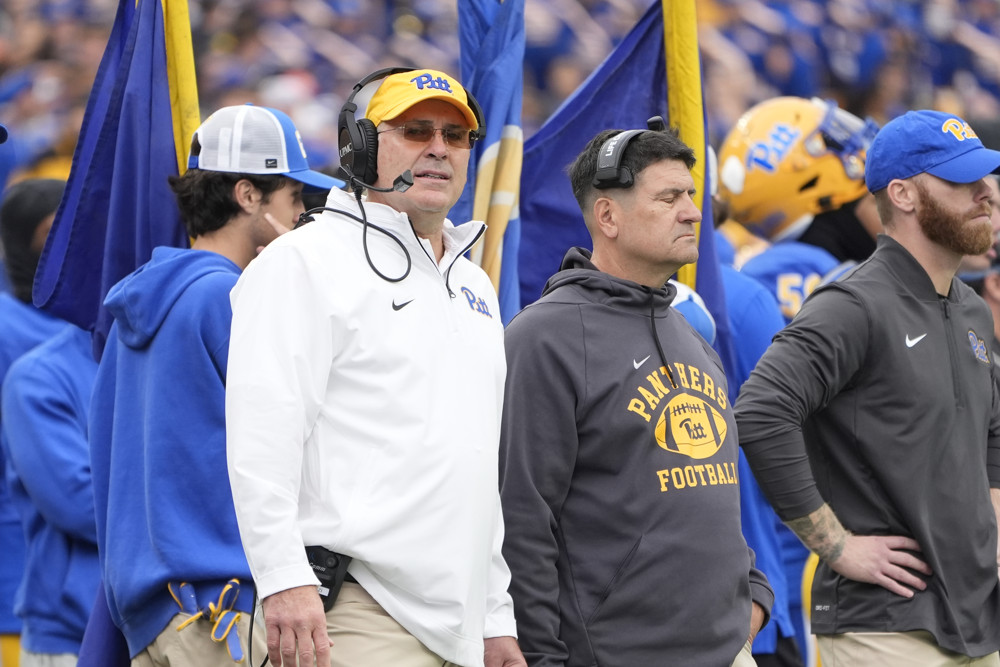
For all the criticism Pitt coach Pat Narduzzi (who, let’s face it, likely was the source for a lot of the anonymous quotes, his ND issues are legion) took for saying the Panthers’ 2025 game against ND “absolutely was not a must-win“, he was 100 percent correct.
Most of Notre Dame’s ACC opponents get most of the benefit when the schools meet:
- Unlike their effect on ND’s schedule strength, ND’s presence is a positive for theirs. A lot of low-level programs can’t get top-25 non-conference opponents to agree to any game, let alone a home game. The ACC dregs get these games gratis.
- The viewing audience for their games against Notre Dame, home or away, dwarf what they usually get. ESPN Game Day ain’t likely to come to Pittsburgh unless the Irish are there.
- The South Bend games the ACC teams get speak for themselves, and, much as they’d hate to admit it, are often bucket-list experiences for their fans.
- The ACC teams sell out their Notre Dame home games, often the only time on their schedules they do so, and get the corresponding increased revenue generation and season ticket sales.
- If Notre Dame loses the game, the ACC gets heightened levels of publicity. If Notre Dame wins the game, as Narduzzi correctly noted, the ACC team’s path to the CFP via the league’s auto-bid remains unchanged.
If anyone is getting “used” in this aspect of the relationship, it’s Notre Dame. And if the ACC teams want the annual beat-downs to actually affect their CFP chances as opposed to the benefits they derive now, you have to wonder if they’ve really thought this through.
At least Narduzzi has proven he can do the math.
ND’s other sports aren’t necessarily benefitting either
A home for the non-football sports was the other benefit ND would receive from the ACC. But how much is that worth now?
- The quality of men’s basketball in the ACC has plummeted in the years since ND arrived and won a conference championship, with the retirement of multiple program-defining coaches and mixed results in the hiring of their successors (yes, I realize Notre Dame is complicit in this). Born-on-third-base Duke coach Jon Scheyer can recruit like a champion but there’s little evidence so far he can coach his team to one. Everyone else has sunk in the last 14 years.
- Notre Dame pulled up the quality of ACC women’s basketball by its participation, so there’s no reason they couldn’t do the same in another conference like the Big East, where old nemesis Connecticut still resides.
- There’s quality in baseball and softball, no doubt. But this assumes ND is taking those sports seriously in the first place
- The ACC doesn’t offer Hockey, and the Lacrosse teams don’t benefit from an ACC qualification to the post-season because the league isn’t big enough, so what’s the point?
- A lot of the remaining sports are match- or meet-based, meaning their ACC participation is only once a year and doesn’t strongly affect the schedule. More importantly, they’re also not revenue-generating and have no post-season media contracts, so it’s not like ND should make this decision based on how they’ll be affected anyway.
As noted, this all assumes Notre Dame is supporting some of these sports properly, a topic we’ll review in the coming weeks. But the ACC hardly is keeping these programs afloat, so there’s no reason to make this decision thinking untold damage will be done to them.
Why Should ND Stay?
I’ve noted plenty of reasons to go. Why do I think they should stay, at least for now? Mainly, one reason:
The Upcoming Realignment
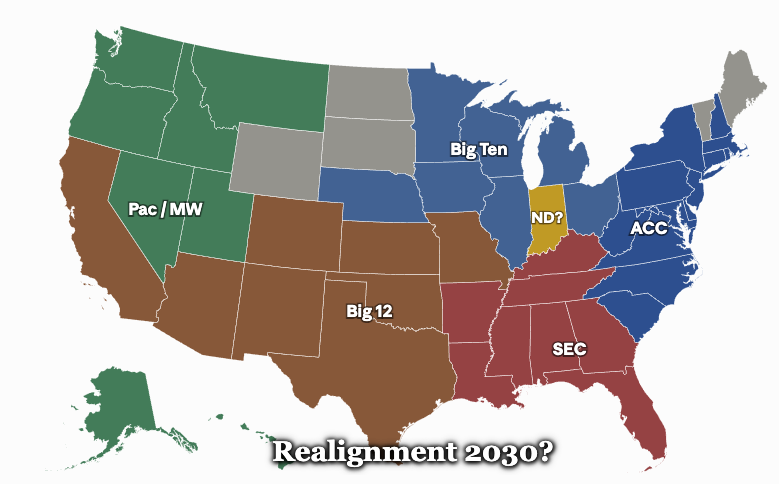
As I said above, college football has at least one more major realignment in its future. It could be the CFP expansion, it could be the Grants of Rights expiration leading to the “Super Conference” being formed, the AI Singularity may prefer it, the possibilities are myriad.
Regardless of how it happens, it’s in the near-term window. Notre Dame needs to be prepared, and I believe the best chance for that preparedness comes from remaining independent in football, which gives them the maximum flexibility to react to whatever comes.
As jerky as the ACC’s behavior has been, if ND can keep the status quo while everything sorts itself out in the next four years, that’s more likely to get them where they need to be than navigating under an agreement on which the ink is still fresh.
The Devils we Know
Yes, this means four years in a “still living with your ex” sitcom. If it were a decade out, I would say pull the rip cord. But ND should be able to do four years in its sleep, especially since the benefits far outweigh the costs.
Sure, it might seem like ND is taking advantage. But the ACC is more than getting its pound of flesh in this agreement, as I detailed above. Any coaches or AD’s who feel like they’re being “taken advantage of” are welcome to step forward and put forth their arguments, not to mention their names.
Tell Mike what you think in the comments below
John Hutton '62 says:
Mike, good stuff. But you have left the hippo in the room: RELEGATION.
So many of us really do research and document the facts that relegation will make for better scheduling, better competition, and better fan participation NO MATTER THE CONFERENCE.
Until you fairly research and discuss relegation, you are like the bride who, after the groom makes his vows, says “I got this. Don’ worry about it.”
Phil Calandra says:
Spot on analysis, Mike! My only caveat is as follows. If the BIG Ten or SEC were to offer ND a deal similar to the current ACC partial membership, I would say take it. That possibility (especially the SEC variant) might not be as farfetched as many would assume. By swiping ND, the SEC might be able to crater the ACC, allowing it to pick up the schools it covets on the cheap.
❤️#501988☘️🏈💪🏻 says:
BIG 10 NEVER!
Will says:
I prefer the ACC because many of their schools align nicely with ND’s commitment to academics. Stanford, Cal, Duke, UNC, Wake, UVA, BC, Miami, and Georgia Tech are all in the upper echelon of elite academic institutions, and 5 of those schools are private. I rarely see the academic perspective articulated when the pros and cons of the various conferences are being debated. On the other hand, am I too old school and too naive to believe that the concept of the student athlete is still of immense value to ND’s overall mission? If it’s not important then college football is a scam that no longer is of any interest to me. One of my best memories of ND was attending classes with guys like Hanratty, Theisman, Gulyas, Dinardo, and Coley O’Brien.
Mike Coffey says:
Not to nitpick, but is that the same NC that gave fake degrees to its athletes for years and should have either (a) received the death penalty or (b) lost their accreditation, but the only reason neither happened is they told different stories to both governing bodies?
I’m with you on Stanford, Duke, VA and GaTech on the academics side. But too many of those schools either don’t or can’t take football seriously, and their presence on ND’s schedules is a detriment to ND.
Will says:
I’m going to make a prediction that sometime in the next 5 years a number of high profile academic elite institutions are going to walk away from the current mess that college football has become. These schools will inevitably come to the conclusion that football in its present form is no longer compatible with the academic mission of these institutions. This is precisely what happened in 1945 when the Ivy League schools collectively de-emphasized football because of its growing commercialization and professionalism. My only question is: what will ND do when its aspirational academic peers decide that enough is enough.
Phil Calandra says:
Hey Will, you missed it. ND already made that call two years ago when it decided to go along with the House settlement and start directly paying the revenue sport student athletes. I’m not talking about NIL money. I’m talking the House wage/salary or whatever you want to call it money. This is an about-face to decades of Father Monk Malloy and other senior CSC members saying openly and publicly that “we will never pay our players”. Cooler heads (Board of Trustees?) prevailed and IMHO they made the right decision.
Will says:
Phil, my sense is that the Board agreed to revenue sharing with the players with the thought that NIL payments would be strictly regulated by the NCAA. That is not what has happened. NIL payments in both football and basketball are actually more out of control now than before revenue sharing. You read everyday of universities spending 50 million a year in NIL for football and 15 million for basketball. Without regulation this absurd spending will continue, and given the proclivity of the “student”/athletes to press their NIL rights in court, the NCAA seems to be shying away from the concept of regulation. Coupled with the new reality of the transfer portal and with the new reality of many “student”/athletes attending upwards of 3 and in some cases 4 different schools to maximize their money grabs, it is very hard to see how the dynamics of this new reality can in any way be fit into the academic mission of higher education. Eventually, the truly elite universities will say enough is enough and opt out. At that time ND will be faced with a very tough choice.
❤️#501988☘️🏈💪🏻 says:
GREAT article! Well said!